酒店户外家具如何进行材质搭配Sep .07.2026 浏览量
A hotel lounge chair may combine aluminum, teak, rope and outdoor cushions. A dining table may use a metal frame with an HPL, glass, ceramic or stone top.
These combinations are not only decorative. Each material has a different role, and the finished product depends on how the materials are connected, approved and produced.
This guide explains the main points to check when developing mixed material outdoor furniture for hospitality projects.
1. Give Each Material a Clear Role
The main frame carries the load and controls the product shape.
Aluminum is often used because it is lightweight and suitable for different forms. Stainless steel may be selected for slimmer frame profiles or a different metal finish. Teak may form the main frame or be used for armrests and contact surfaces.
Rope, woven webbing and PE rattan are used for seats, backs or side panels. They affect comfort, airflow and the visual weight of the product.
Cushions provide comfort, while tabletops must suit the intended use, cleaning requirements and frame support.
A material should not be added only because it looks attractive in a rendering. Its structural role, fixing method and maintenance requirements must also be clear.
2. Common Material Combinations
Aluminum, Rope and Outdoor Fabric
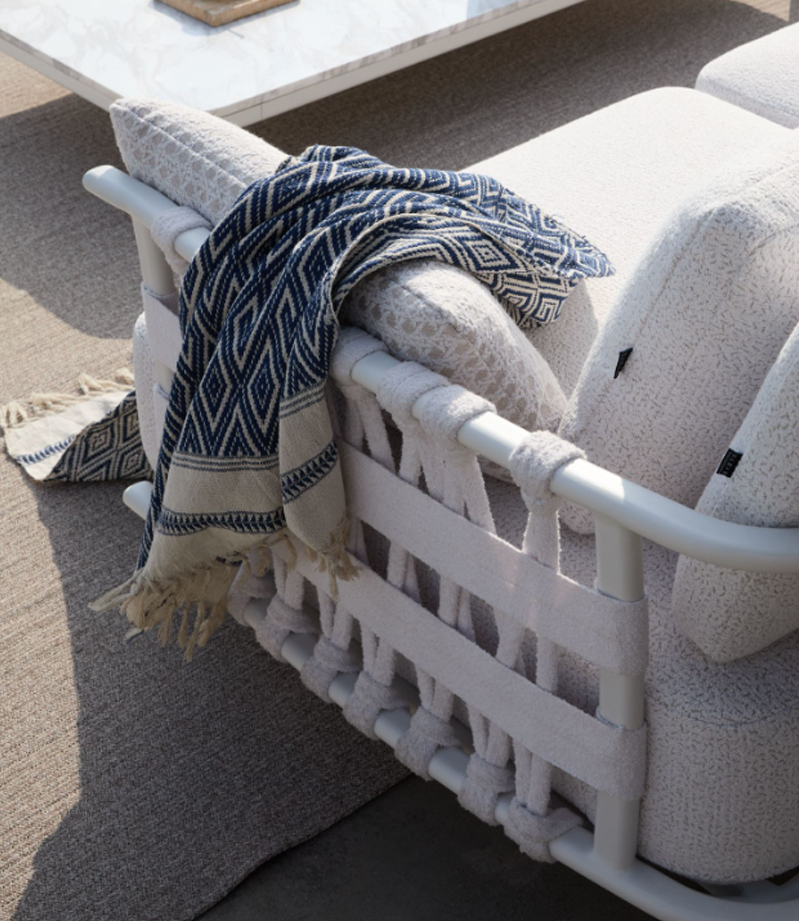
Aluminum, Rope and Outdoor Fabric
This combination is widely used for lounge chairs, sofas, dining chairs and daybeds.
The frame edge must be smooth where the rope makes contact. Weaving tension should keep the product shape without placing too much pressure on the frame.
The seat structure and cushion base must also allow water to leave the product.
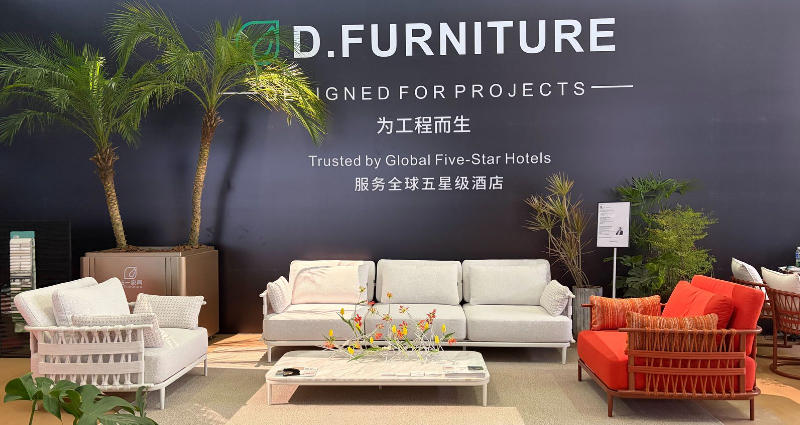
Aluminum, Teak and Outdoor Fabric
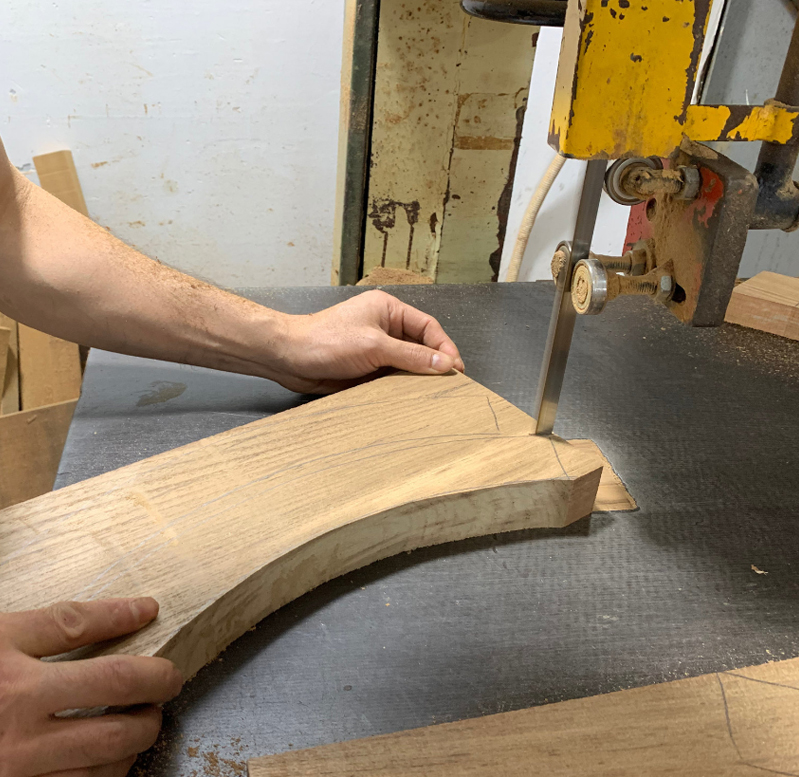
Teak may be used for armrests, legs or side details.
It creates a warmer contact surface and softens the appearance of the metal frame.
The teak and aluminum parts must be securely fixed while remaining practical for assembly and future replacement. The teak finish and powder-coating colour should be approved together.
Metal Frames with Outdoor Tabletops
Aluminum and stainless-steel frames can be combined with teak, HPL, sintered stone, natural stone, tempered glass or ceramic-coated glass.
Each tabletop has different weight, edge and support requirements.
Heavy tops may need additional frame support. Stone and glass edges also require more protection during production, packing and transport.
3. Resolve Structure and Connections Early
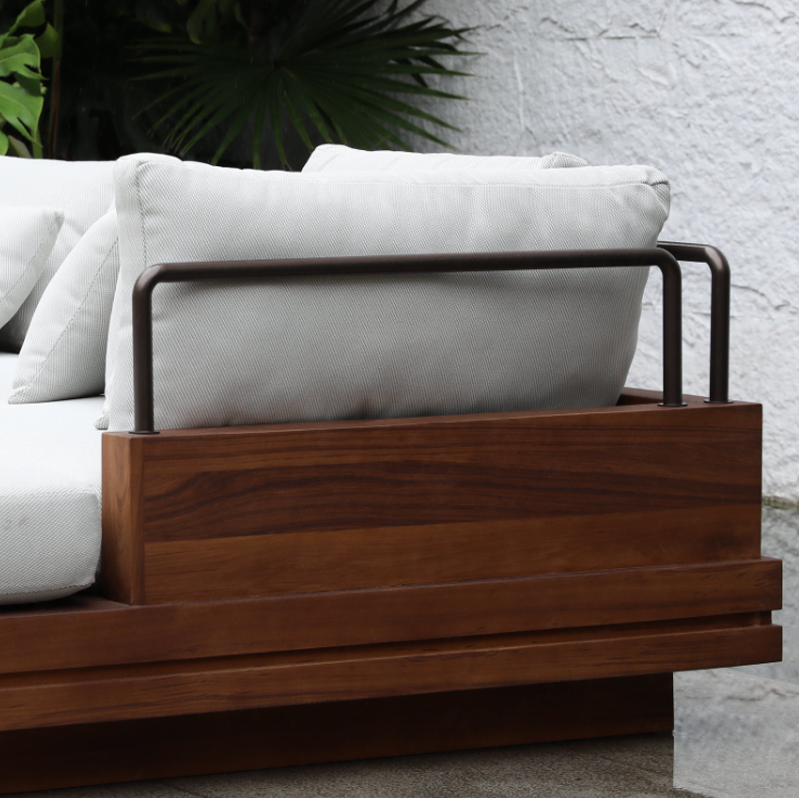
The connection between materials is often more important than the material list.
During product breakdown and structure development, the factory must decide:
●How teak connects to metal
●How rope contacts the frame
●How the tabletop is supported
●Where screws remain accessible
●How cushions are removed
●How the structure avoids hidden areas where water may remain
These details should be resolved before the production drawings are finalised.
D.FURNITURE normally uses 304-grade or higher stainless-steel screws for outdoor furniture. Some projects specify 316-grade fittings where higher corrosion resistance is required.
Wood, metal and woven materials also respond differently during outdoor use. Their connections should allow for small changes without affecting stability or appearance.
The finished product should remain practical to assemble, inspect, clean and repair.
4. Approve Materials as One Product
Mixed material furniture may include finishes from several suppliers:
●Powder coating
●Stainless-steel finish
●Teak oil finish
●Rope or PE rattan
●Outdoor fabric
●Tabletop surface
These materials should be reviewed together.
D.FURNITURE provides the available finish, rope, fabric, teak and tabletop samples for the designer or project team to prepare the final material board.
The approved references should record the material, colour, finish, texture and application area.
Small stone samples may not show the full pattern of a slab. If a physical sample is unavailable, full-slab images can be provided.
Where the client purchases the full slab, the preferred cutting area may be selected according to the veins and colour movement. This should be confirmed before cutting begins.
Material samples confirm colour and finish. The prototype confirms whether the complete product works.
The main checks may include:
●Overall proportions
●Frame stability
●Seat height after cushion compression
●Rope tension
●Material transitions
●Cushion fit
●Tabletop support and installation
●Water drainage
●Screw access
●Finish consistency
Any approved adjustment should be updated in the drawing and production requirements before mass production.
5. Packing and Project Information
Different materials require different packing protection.
Stone and glass need edge protection. Teak surfaces should be separated from metal parts. Rope, fabric and cushions should not be pressed against hard fittings.
For an initial review, provide:
●Design rendering or reference image
●Product drawing
●Required dimensions
●Preferred materials
●Colour and finish references
●Project location
●Application area
●Required quantity
●Delivery schedule
The manufacturer should also know which design details must remain unchanged and where material alternatives may be considered.
This allows the structure, connections and sampling requirements to be reviewed before quotation.
How D.FURNITURE Coordinates Mixed Materials
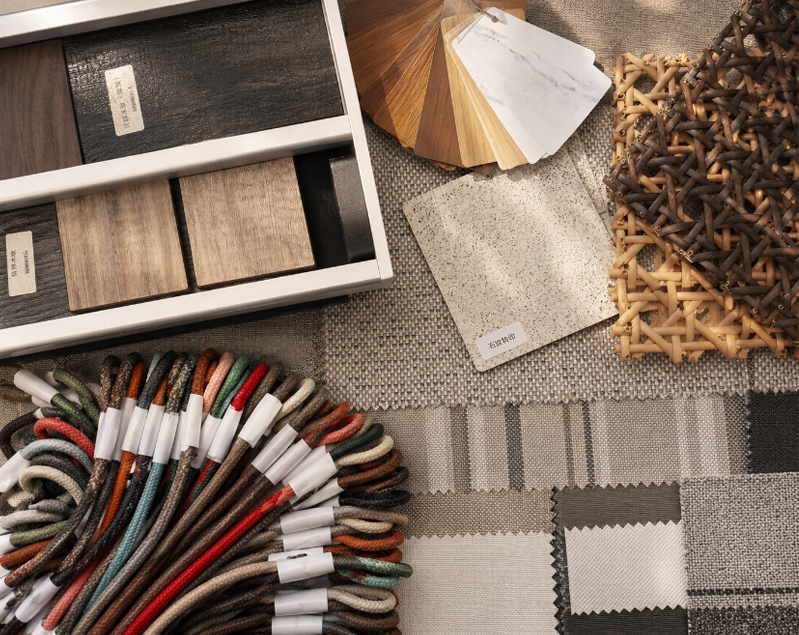
D.FURNITURE works with aluminum, stainless steel, teak, rope, PE rattan, outdoor fabric, quick-dry foam and different outdoor tabletop materials.
For custom projects, our support may include:
●Reviewing the design rendering
●Defining the role of each material
●Checking structure and material connections
●Providing material and finish samples
●Preparing shop drawings and prototypes
●Recording approved production and packing details
The final combination should support the design, structure, comfort, maintenance and delivery needs of the project.
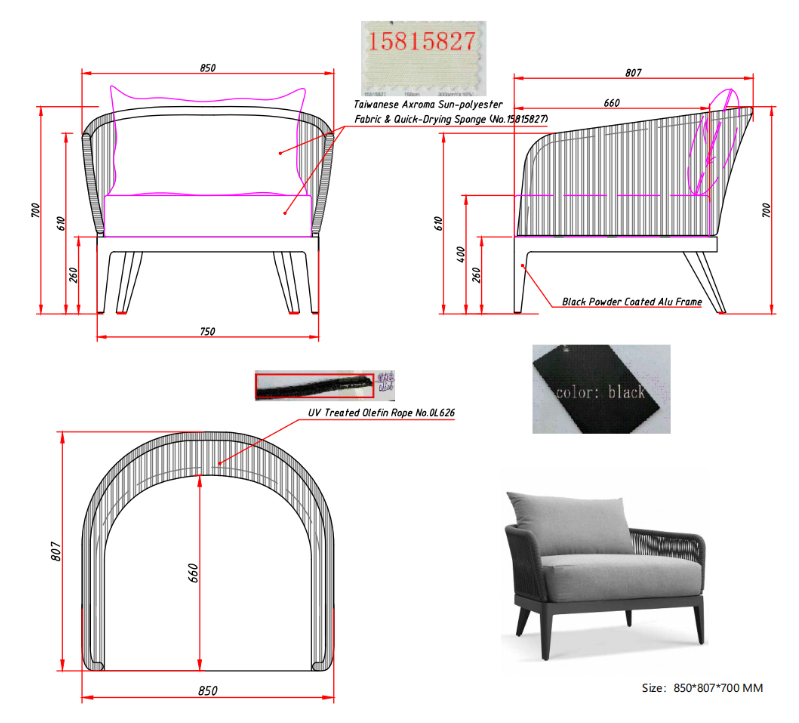
Conclusion
Mixed material furniture works well only when the materials are considered as one product.
The structure, connections, finishes, sample approval and packing should be confirmed before mass production.
Developing a Mixed Material Furniture Design?
Share your rendering, drawing and preferred materials with D.FURNITURE for an initial material and construction review.
Primary Button: Send Your Design
Secondary Button: Request Material Options
Prepared by D.FURNITURE Project Content Team
Technical Review by D.FURNITURE Product Development Team
Published: [September 1, 2026]
Last Reviewed: [September 1, 2026]